

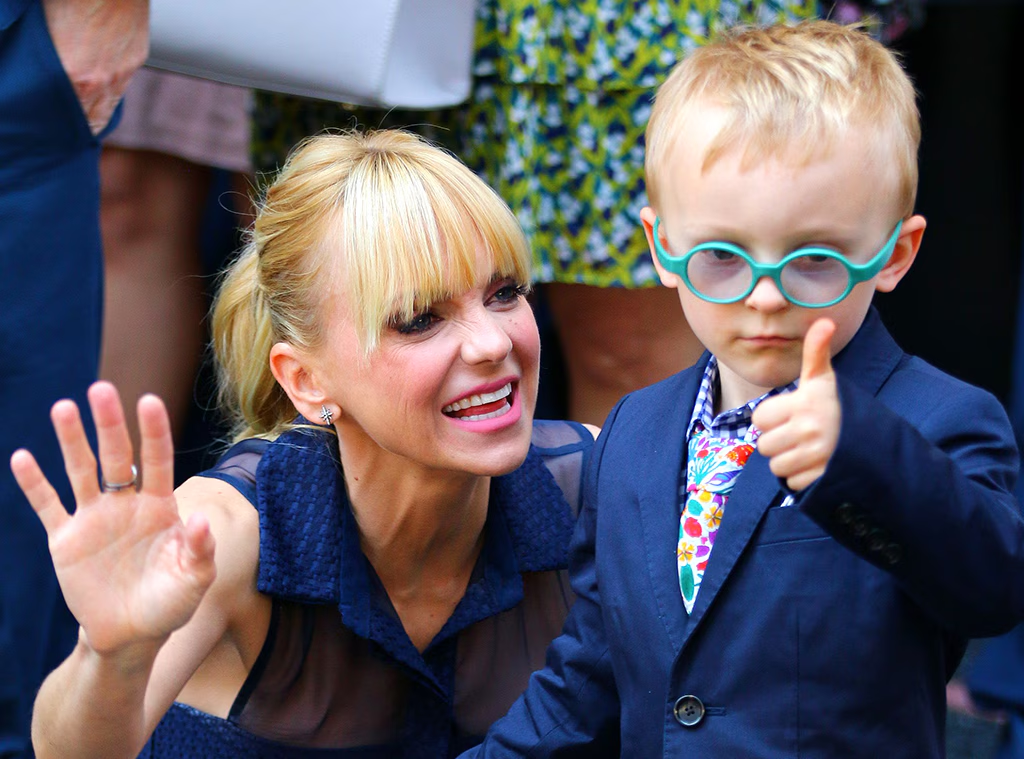

When the conversation turns to Anna Faris children news, what’s actually being discussed is a calculated exercise in privacy management that most public figures struggle to master. The actress shares one son, Jack, with ex-husband Chris Pratt, and the way she navigates public commentary about him reveals a broader pattern in how celebrity parents balance visibility with protection.
This isn’t just about shielding a child from cameras. It’s about controlling the information architecture around a family structure that’s been rebuilt across two separate households, with Pratt now married to Katherine Schwarzenegger and Faris to cinematographer Michael Barrett. The reality is that every public mention becomes a data point in a narrative neither parent fully owns.
Privacy Strategy Under Scrutiny, And Why Silence Feels Impossible
Faris has shared selective updates about Jack over time, typically through interviews where she discusses parenting philosophy rather than specific details. This approach creates just enough content to satisfy public curiosity without offering material that could be weaponized or misinterpreted later.
The challenge here is that total silence invites speculation, while over-sharing invites criticism. From a practical standpoint, Faris has landed on what I’ve seen work in other high-stakes reputation scenarios: give context, not content. She’ll discuss the emotional experience of watching Jack grow but won’t specify schools, interests, or identifying traits that could compromise his autonomy.
What’s particularly smart is how she frames these updates as reflections on her own development as a parent rather than exposés about her child. The focus stays on her learning curve, not his private life. That’s a reframing technique that protects the subject while still offering substance.
Co-Parenting Narratives That Signal Stability, Not Conflict
One of the most consistent threads in Anna Faris children news coverage is how she and Pratt manage their co-parenting arrangement. Public statements from both sides emphasize collaboration, mutual respect, and an expanding sense of family that includes new spouses and half-siblings.
Look, the bottom line is that co-parenting stories can easily become ammunition in public feuds. Faris has avoided that by consistently praising Pratt and Schwarzenegger, even describing the dynamic as easier with time. That’s not just diplomatic—it’s strategic risk mitigation.
The broader implication is that these narratives shape how the public interprets both parents’ character. A contentious co-parenting situation would invite judgment and side-taking. By signaling unity and shared priorities, Faris and Pratt foreclose that possibility before it starts. It’s a lesson in how perception management works when multiple stakeholders are involved.
The Timing Behind Rare Updates And What They Reveal
Faris doesn’t offer updates on a predictable schedule, which actually makes each one more impactful. When she does speak about Jack, it’s typically tied to a project she’s promoting or a broader conversation about parenting challenges. That’s not accidental—it’s how you create narrative efficiency.
What I’ve learned from observing similar patterns is that strategic timing allows you to control the context. If you only discuss your child when you’re also discussing professional work, the story becomes about balance and juggling priorities. If you discuss them in isolation, the story becomes about the child alone, which shifts the risk profile.
Recently, Faris mentioned how proud she felt watching Jack navigate challenges with resilience, framing it as a validation of her parenting approach. That kind of statement serves dual purposes: it humanizes her while reinforcing a competent, thoughtful image. The timing, coming after she experienced personal setbacks, also positions her as someone who finds strength through family.
Health Context That Shapes The Entire Conversation
One reason Anna Faris children news carries particular sensitivity is that Jack faced health challenges early in life. While neither parent has disclosed extensive details, the acknowledgment that he had complications adds a layer of protectiveness to how they discuss him publicly.
From a reputational standpoint, this context explains why both Faris and Pratt have been especially cautious. Parents of children with health histories often face unsolicited advice, invasive questions, and judgment about medical decisions. By limiting what’s shared, they’ve created boundaries that most audiences respect.
The broader principle here is that once you disclose a vulnerability, you lose control over how others interpret or weaponize it. Faris has clearly decided that Jack’s privacy outweighs any benefit she might gain from increased sympathy or relatability. That’s a tradeoff most experienced public figures eventually make, but it requires discipline to maintain.
Platform Dynamics And The Pressure To Perform Transparency
The current media environment rewards constant visibility, which creates pressure for public figures to share more than they might otherwise choose. Faris has largely resisted that pressure, opting for intermittent, controlled disclosures rather than ongoing documentation of Jack’s life.
What’s interesting is how this positions her relative to other celebrity parents who share frequently. Some audiences interpret restraint as secrecy or aloofness, while others see it as respectful parenting. The data tells us that public opinion on this issue is divided, which means there’s no universally “correct” approach.
Here’s what actually works: consistency. If you establish early that you won’t be sharing photos, details, or frequent updates, audiences adjust their expectations. Faris set that precedent and has largely stuck to it. The alternative—sporadic sharing followed by sudden withdrawal—reads as reactive and invites more scrutiny. She’s avoided that trap by maintaining a steady, low-disclosure approach over time.