

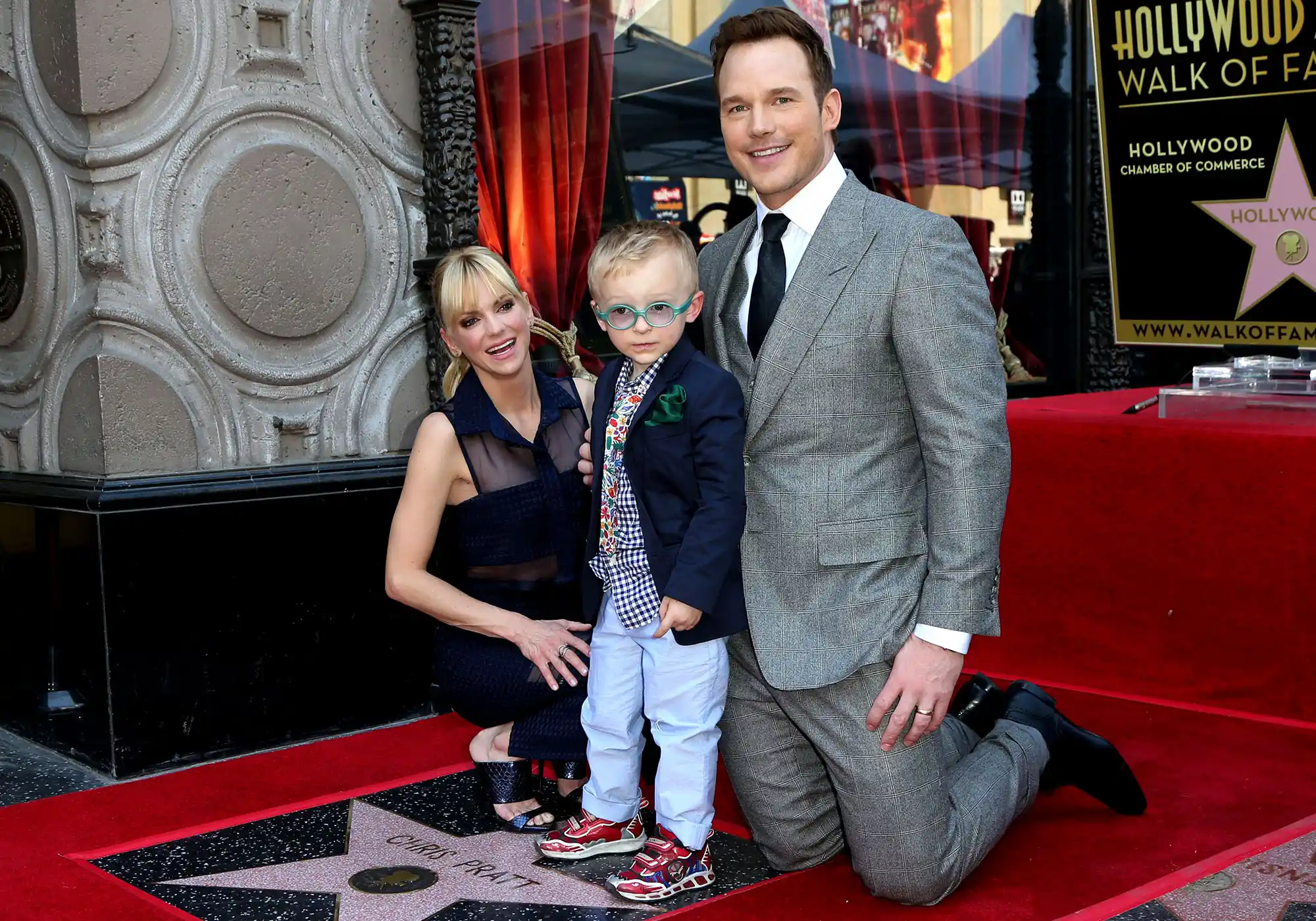

Public attention on celebrity families intensifies when those families are blended, navigated across multiple partnerships, and managed under the scrutiny of both professional success and personal transition. Chris Pratt’s four children—spanning two marriages and a decade of Hollywood evolution—offer a case study in how modern family structures get documented, interpreted, and commodified in real-time.
Blended Family Complexity And The Mechanics Of Public Perception
Chris Pratt shares one son, Jack, with ex-wife Anna Faris, and three children—Lyla, Eloise, and Ford—with current wife Katherine Schwarzenegger. That family structure immediately creates narrative complexity: how does he navigate co-parenting with a high-profile ex while building a new family with an equally high-profile current partner? The public watches these dynamics not out of malice, but because they reflect challenges millions of families face without cameras.
From a reputational standpoint, this is difficult terrain. Any perceived imbalance in how he discusses or features his children gets scrutinized for what it reveals about priorities, relationships, or favoritism. That’s not fair, but it’s predictable. The reality is that blended families require more careful communication than traditional structures because every public statement gets analyzed for subtext, and every photo gets examined for who’s included versus who’s absent.
Social Media Strategy And The Risk Of Visibility Imbalance
Look, the bottom line is that Pratt occasionally shares family content on social platforms, and each post gets dissected for what it includes and what it doesn’t. When he posts photos with all four children, it’s celebrated as inclusive co-parenting. When he posts only his children with Schwarzenegger, questions arise about Jack’s visibility and Faris’s comfort level with shared custody exposure. That’s the trap of selective sharing: you can’t win, you can only manage damage.
Here’s what actually works in these situations: consistency in privacy boundaries across all children, regardless of which parent they’re shared with. If you’re going to post family content, everyone gets equal visibility or no one does. If privacy is the priority for one child, it has to be the priority for all. Pratt’s approach has evolved toward more privacy overall, which is the safer long-term play even if it frustrates audiences who want access.
Partnership Dynamics And How New Families Navigate Old Scrutiny
What I’ve seen play out repeatedly is that second marriages involving children from prior relationships face disproportionate scrutiny around “replacement” narratives. Pratt’s growing family with Schwarzenegger has triggered speculation about whether his focus has shifted away from Jack, despite zero evidence supporting that claim. That’s projection, not analysis, but it affects how every public appearance and statement gets interpreted.
The reality is that managing these perceptions requires more than good intentions—it requires strategic communication. Pratt has spoken broadly about fatherhood and the joy of his growing family, but he’s been careful not to create hierarchies or comparisons. That’s disciplined messaging under conditions where any misstep gets amplified. Most people don’t have to navigate these dynamics with millions watching, which is why celebrity blended families operate under pressure that’s hard to contextualize.
Co-Parenting Visibility And Why Some Stories Stay Private
From a practical standpoint, Pratt and Faris have both maintained relatively low profiles regarding their co-parenting arrangement. That’s smart, but it also means the public fills gaps with speculation. When you don’t provide a narrative, one gets created for you—and it’s rarely accurate or flattering. The tradeoff is clear: share enough to manage perception, but not so much that you compromise your children’s privacy or your co-parent relationship.
What’s interesting is that Schwarzenegger’s family—the Schwarzenegger-Shriver dynasty—brings its own media dynamics and expectations. That adds another layer: Pratt isn’t just managing his own public image and his children’s privacy, he’s operating within a family structure that has its own visibility patterns and media relationships. That requires negotiation, alignment, and constant recalibration as children grow and circumstances change.
Attention Cycles And The Long-Term Cost Of Family Visibility
Here’s what most people miss: the goal isn’t to satisfy public curiosity, it’s to protect your children’s ability to develop outside the narrative frameworks that get imposed on them. Pratt’s children didn’t choose public life, and managing their exposure isn’t about secrecy—it’s about giving them the option to define themselves rather than being defined by their parents’ careers, relationships, or tabloid storylines.
The data tells us that celebrity children who grow up with managed exposure—visible enough to prevent wild speculation, private enough to maintain normalcy—navigate adulthood more successfully than those at either extreme. Total invisibility creates mystery and obsessive interest; total visibility creates exploitation and identity issues. Pratt’s evolving approach suggests he’s learning that balance in real-time, which is all any parent can do when the stakes are this high and the attention this relentless.